
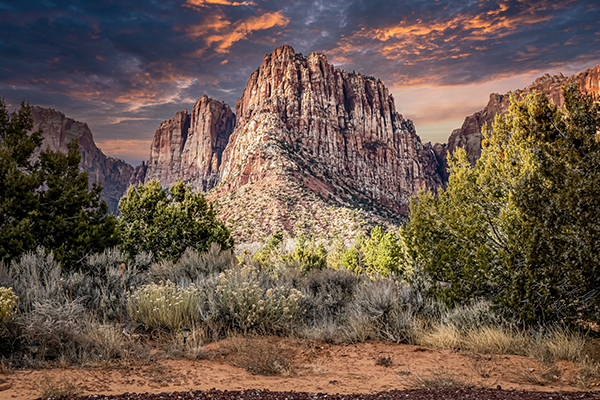
In the southern part of Utah, there is a place that many call one of the most striking natural areas in the United States. Zion is sandstone cliffs, sheer canyon walls and a sense of space where time seems to move more slowly. Here, the dry air, warm colours of the rock, even light and fragile patches of greenery along the riverbeds create a special atmosphere that remains in your memory long after your trip.
How Zion Park came to be
The history of Zion goes back way before the first European settlers showed up. For a long time, this area was home to the Anasazi and Peblo tribes, who left behind traces of their lives in the form of campsites, decorative items, and rock paintings. The stone walls here served as both protection and part of the culture. The location provided shelter from the heat, while also offering a view of the valley.
Later, Mormon settlers arrived here. They named the canyon ‘Zion,’ meaning ‘place of sacred rest.’ At the beginning of the 20th century, interest in this region grew, and in 1909, the area was designated a national monument. Ten years later, in 1919, Zion officially became a US national park.
Landscape features and geology
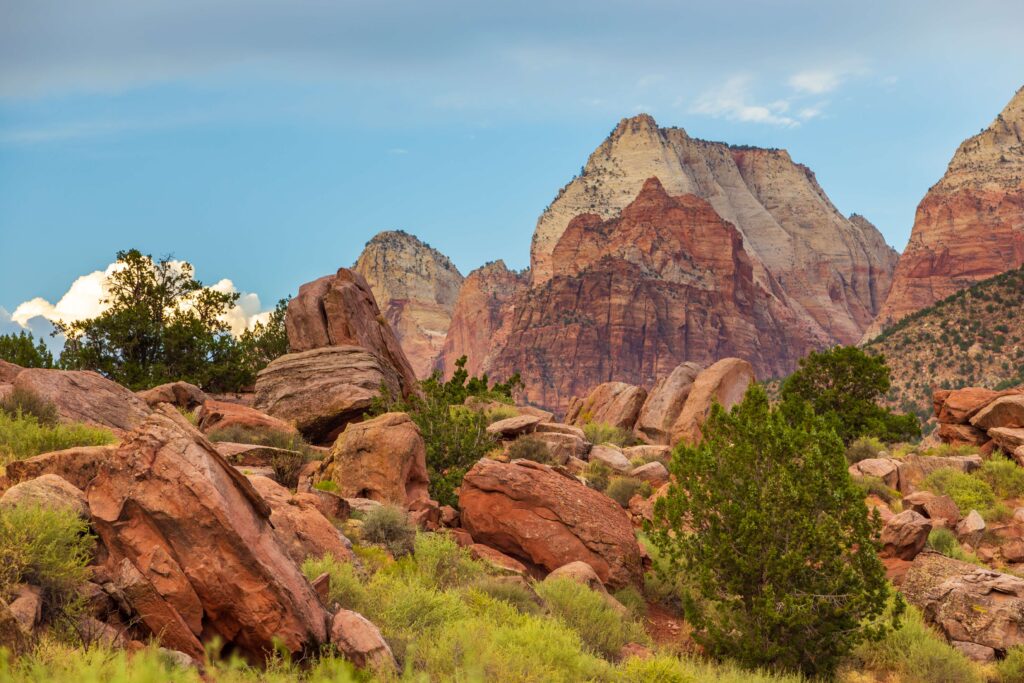
The main landscape feature is deep canyons created by rivers and wind. Red sandstone is cut into layers that look like an open book, its pages rewritten by time. They literally show the history of the region in stone.
The rocks here reach heights of over a thousand metres. Because of this, the valley is unevenly lit by the sun: in some places, the heat is intense from noon to evening, while in others, the sun’s rays appear only for a brief moment in the morning. Therefore, shadows and light become part of the landscape.
Zion is located at the intersection of several climatic zones: the desert on the Nevada side, the humid plateaus to the north, and the depths of the canyon. For this reason, the nature here varies over short distances – walk a few kilometres, and instead of dry slopes, you will find humid areas with moss and shady trees.
Flora and fauna
The vegetation in Zion is diverse. Yucca, cacti, and Mormon tea grow in dry areas. Where there is water and a little more shade, cottonwood trees, maples, and poplars appear. On slopes that remain cool and moist, you can find ferns and moss hiding under overhanging stone slabs.
The contrasts are especially noticeable in spring and autumn: in spring, the greenery becomes brighter, and in autumn, the leaves of the mountain maples turn brick-red, echoing the colours of the rocks.
The park is home to mules, foxes, coyotes, deer, and numerous birds, including golden eagles and condors. During the warm season, you can see lizards, and if you look closely, you can see traces of mountain sheep. Animals are often seen closer to evening, when the heat subsides and the canyon is bathed in softer light.
Popular routes for travellers
Zion is known for its trails, each of which offers its own view of the canyon. Many of them require physical and psychological preparation. The difference in altitude, the heat and the need to watch your step are an integral part of hiking here.
Angel’s Landing
One of the most famous and impressive routes. The path leads along a slope with steep climbs and a narrow ridge closer to the top. It offers a panorama of the valley that looks almost like a painting: the lines of rivers, trees below, light on the canyon walls.
The Narrows
The route runs directly along the riverbed. The water can reach knee height or higher, depending on the season. The rocks here come so close together that it feels like you are walking through a corridor left by ancient forces.
Canyon Overlook Trail
This trail is shorter and easier than the previous two, but the view of the valley from here is just as impressive. The route is suitable for those who want to see the panorama but are not ready for difficult transitions.
When to go: weather and seasons in Zion
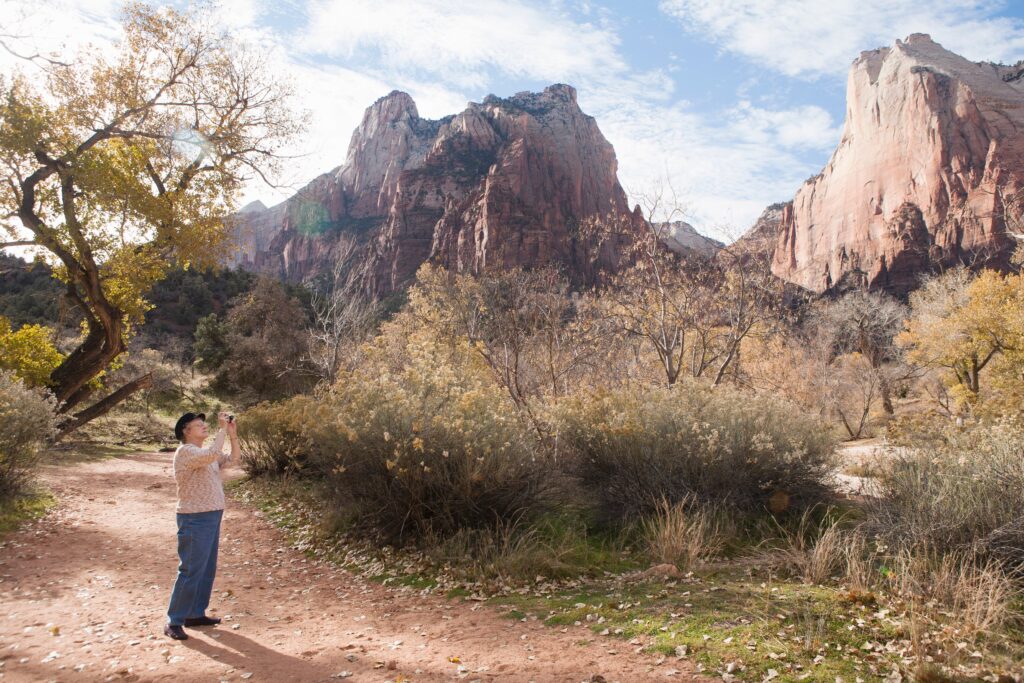
The park is open year-round, but the experience varies. Spring brings more moisture and greenery, summer brings bright light and high temperatures, autumn brings calm and soft colours, and winter brings silence and coolness.
In spring, the valley gradually fills with greenery. It is warm during the day, but it can remain cool in the mornings, especially in the shady areas of the canyons. The Virgin River widens during this period, and some routes may require careful footing.
In summer, the heat becomes noticeable, especially in the central part of the canyon. During the day, the air can be thick and warm, so many people prefer to go hiking either early in the morning or closer to evening.
Autumn gradually calms the park. The valley turns golden, the wind softens, and the sky clears. This is one of the most beloved times of year for those who prefer long, unhurried walks. Daytime temperatures are usually comfortable, and evenings are cool.
In winter, Zion becomes quieter. The peaks may be covered with snow, and the light takes on a soft, clear hue. Snow is less common in the central part of the park, but the morning frost is noticeable. Many choose to visit outside of peak season to better experience the canyon without large crowds.
Visiting the park: important things to consider
For convenience, there is a shuttle system that helps reduce traffic in the valley. Cars are not allowed in the main areas during the season, so it is best to plan your trip using public transport within the park. Prepare your footwear and water – it’s a must. There are no unnecessary services here, and that’s what makes the park so natural.
Zion National Park is a place where time feels different. There’s no need to rush or ‘keep up’. Every route, every stone shadow, every tree branch and every bend in the river speaks of the natural order of things. Zion teaches you to observe. And those who know how to observe take away much more than just impressions.